

Legislative season in Maine is very busy for people aiming to protect the rural landscape from industrial energy infrastructure installations. (What does that mouthful mean? Solar panel fields. Wind turbine mountaintops. High voltage transmission lines. Big scale battery banks. Data centers.)
But there is good news, and it is evidence that genuine public participation—from people who would be impacted by these ongoing infringements on their backyards—well, it can work.
LD 2174 defeated.
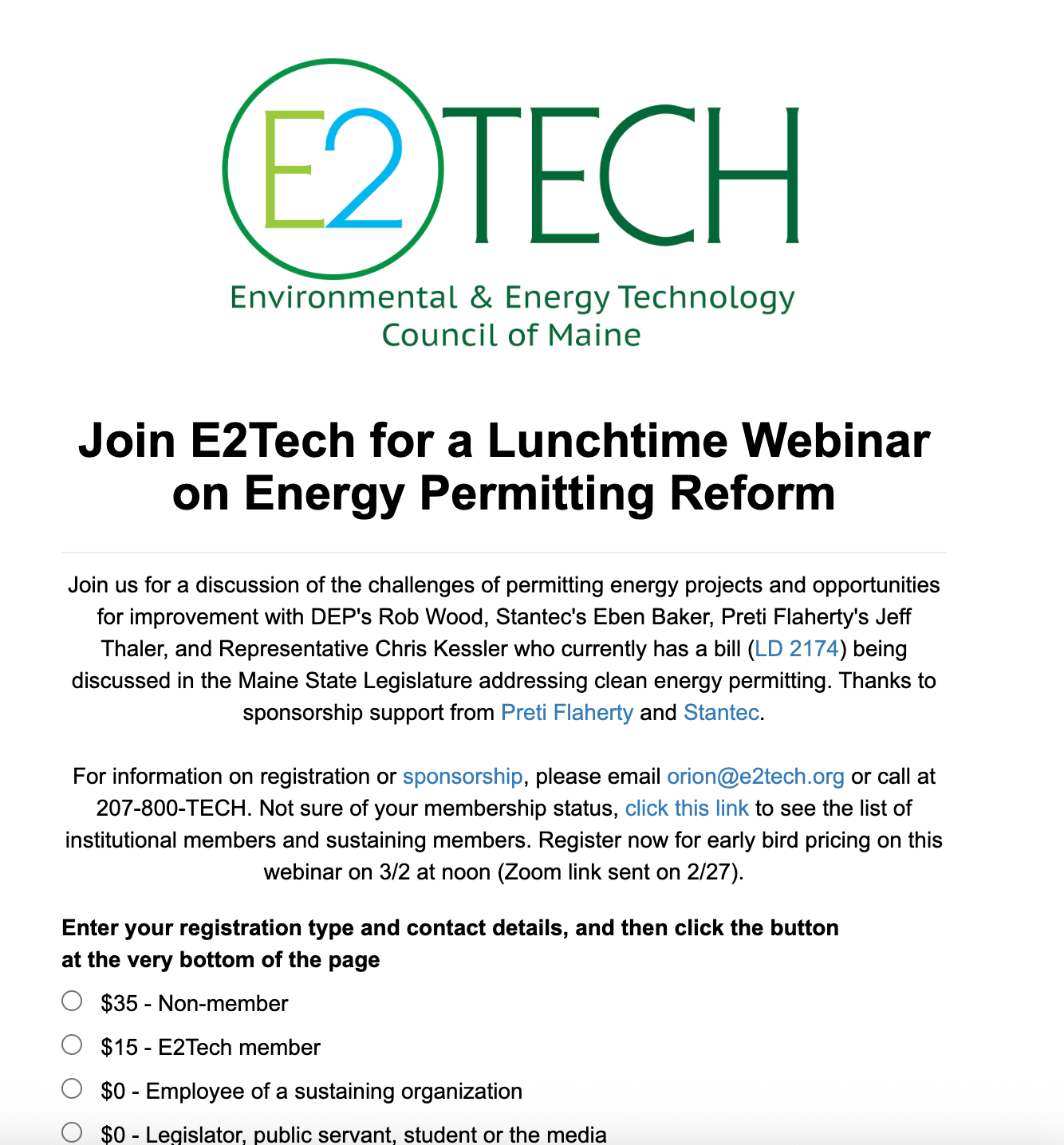
LD 2174 was voted down in committee with Ought Not to Pass. This was a bill the sponsor was absolutely certain would pass—and told a member of our group so. Moreover, E2Tech hosted a web seminar this past Monday which probably was intended to be a jubilant event for the supporters of LD 2174. But it was full of equivocation and hesitation—likely because the prior week’s public hearing had evidenced such strong resistance.
Eminent Domain Rulemaking—pretty good
Two years ago, Preserve Rural Maine and other community members participated in proposing language that would help to protect rural land owners when it came to eminent domain takings for transmission line installations. This resulted in a PUC docket (2025-00279) to actually make the rules. This week, the results were posted and, in many instances, the PUC agreed with the recommendations of Preserve Rural Maine. The files from the docket are posted below for your convenience.

In other news, we are brainstorming easy ways to make the Maine legislature (1) more like New Hampshire in terms of public access, and (2) easier for public participation.
Some thoughts include:
Scarlet letters for lobbyists (in NH lobbyists must wear blaze orange name tag pins)
Fewer bills every session (NH pushes through less than half the number of Maine, and has the same population)
Bill title must reflect the bill content accurately
Appropriate public notice of seven days, and bill text and amendments musts also be published to the public for seven days
Paid lobbyists testify last
Lawyers who work for law firms must register as lobbyists and wear the scarlet letter if their firm has clients that are actively (within the past three years) trying to get legislation changed to their benefit. It’s as simple as a conflict check, and law firms know how to run those
Lobbyists who are paid to attend work sessions must include that time as part of their lobbying accounting
Please share your ideas!


