It’s about 15 minutes. An auto generated transcription is posted below.
(WVOM player allowed a file download, it starts with a brief ad, sorry!)
MAINE’S MORNING NEWS — COUNTY LINE WIND PROJECT
HOST: Let us start by welcoming back to the program State Representative Tracy Quint, the Republican of Hodgdon. Heard us talking about this project last week, sent us a text. Tracy, welcome back to Maine’s Morning News.
TRACY QUINT: Thank you, Rick. Good morning.
HOST: And you introduced us to Tanya Blanchard, the president of Preserve Rural Maine, out of Thorndike. Tanya, I want to welcome you to Maine’s Morning News. Thanks for giving us some time on the phone to look into this issue.
TANYA BLANCHARD: Thank you very much. Good morning.
HOST: Representative Quint, we’re going to start with you. What is the most important thing that maybe the state of Maine, and maybe the people in Aroostook County, haven’t been told about the Clearway Energy’s County Line Wind Farm? It’s supposed to generate 800 megawatts. What’s missing from the conversation so far?
TRACY QUINT: Truly, there’s a lot missing from the conversation. But I want to back up and just explain a little bit of the background first. So I was reached out to by the community in Haynesville. I am the state representative for that town, but they are looking on the local level at what to do about this project that sort of just was dumped on them.
So I lived in the rural areas for 38 years, and as a teenager I lived in Topsfield, which was recently given [the designation] of being the most rural town in Maine. And what is happening is a narrative is being put out about this area at the very beginning, before the project is up and running. And I find it rather nefarious, because this narrative from a multibillion-dollar international company, you know, their advocates and the climate activists, they’re attempting to diminish the value and the intellect of the people who are actually living in this area that will be most affected.
You know, they try to say that we’re unaware of economics, we don’t really know what this is about. But we’re very aware of this [unclear] in the rural area here, and many of them have been caused by the Augusta Democrats, the policies, their unfunded mandates, and they are unsustainable.
So yes, we do actually want business development in our areas, but not with the destruction of the natural resources that we have. And that has been the main thing that has been addressed, not just by Haynesville but the surrounding communities as well. I represent 47 towns in Aroostook, Penobscot, and Washington counties, and all rural communities.
So I think one of the areas is just: what is this project? Because it’s rather dumped on us. And I think that Tanya would be better able to speak to that, because she worked with the corridor project earlier. And so I would like to bounce it over to her and let her give some background about that.
HOST: Tanya, indeed, give us your background on this, and what are we missing? What are we missing?
TANYA BLANCHARD: So I’ve been doing this for three years. When this project originally was going to be done, a whole 3,500 landowners got letters from a developer saying, “Hey, we’re going to potentially put a transmission line in your backyard or in abutters’, and it’s going to be fed from the King Pine Wind project.”
So we organized, formed Preserve Rural Maine, and we have been incredibly intimately involved with this process since then.
So this iteration of the project, this is the County Line Wind project that’s been awarded the grant, or the bid, by the PUC, and CMP has been awarded the transmission portion of the project. One of the big complaints that we have is that this is all being done behind closed doors. We don’t know a lot about these projects.
I was able to find some information on the County Line Wind project from Clearway that they had submitted in testimony back in 2024. And, you know, you have to dig through legislative documents in order to find this information. It shouldn’t be that way. We should be able to pull up information, see exactly what’s happening, and easily inform ourselves on it.
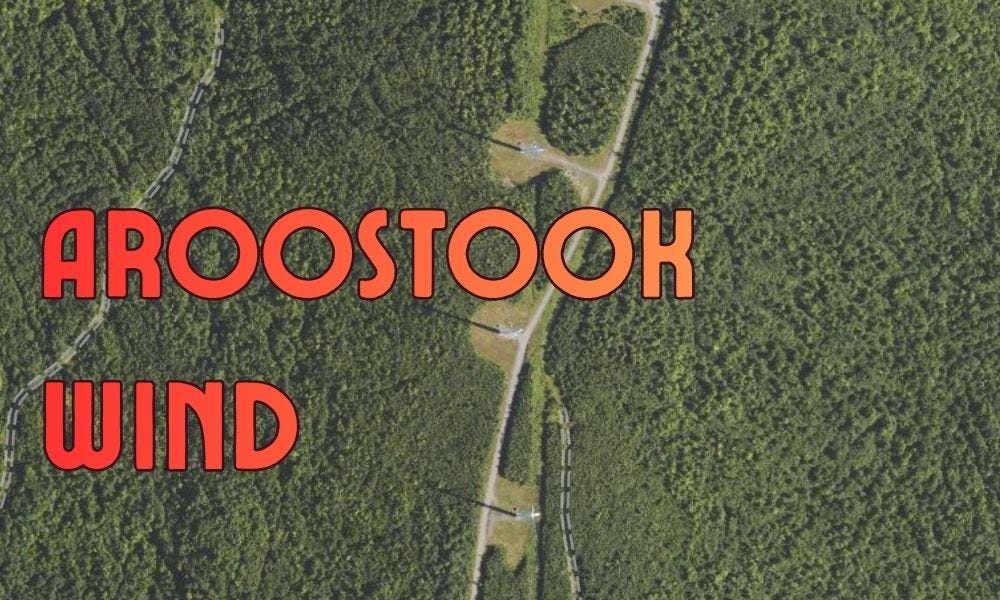
So this Clearway County Line Wind project, it’s going to be on 50,000 acres. According to their testimony, they said in their testimony that this has the potential for up to 800 megawatts of wind, which the PUC has awarded, said, “Yes, we’ll take 600 here in Maine.” Rhode Island is taking 150. That leaves another 50, you know, left out for bid for the other states.
But in Clearway’s own testimony, they said 400 megawatts is particularly cost-effective. So we’re going to overbuild this project. We’re going to spend more money building a project on 50,000 acres in gorgeous Aroostook County that will send limited amounts of energy to the ISO New England grid.
HOST: Fifty thousand acres. Let me come back to you, State Representative Tracy Quint. As I understand it, it’s 50,000 acres, but it’s on private commercial timberland, not public. So is there an issue with telling someone who’s a private landowner that they can’t sell or give to the project?
TRACY QUINT: So there is not an issue with them being able to sell that land for a project. Where the issue becomes a problem is on the county level, the approval process for a project, and on the local levels in the surrounding towns, with lines going through. The approval and permitting process is there.
And one of the issues that we are having right now is the PUC advocate, who is normally the person that you would turn to for help and information about this, is actually herself a—she’s a climate activist. And so we don’t have the actual help in regards to this project that we would have had in the past. And so that has been a concerning issue surrounding this.
You know, I’ve spoken with her directly, and just the way that we have gotten to where we are, with the PUC being the oversight for that. And there were bills that went in. Initially a two-thirds vote was needed by the legislature for these large projects to go through. And a bill was put in by Kessler, and that bill actually gave the authority over to the PUC. So now the PUC can take over that, and once again we have a climate activist in that role, and give permission for this project, even though the people had put in a referendum stating they wanted the legislature to vote on that with a two-thirds vote.
So that’s very concerning that a referendum was turned over by a simple majority vote in the legislature. I have a problem with that. I do have a bill this session already going in to overturn that, because I think when the people of Maine put forward a referendum that needs a two-thirds vote, that the legislature should have to follow through with that.
HOST: Tanya, as president of Preserve Rural Maine, let me ask you: Clearway is making some promises. Five hundred thousand dollars in community benefits every year. They’re promising some tax revenue and then maybe some jobs, at least to get this thing going. Is that enough to appease concerns over what could be lost?
TANYA BLANCHARD: Well, it’s interesting that you bring that up, because they are promising $500,000 in community benefits, but state law requires that they put forward at least $4,000 per wind turbine in community benefits. And so if we do the math, that’s 125 wind turbines, which makes sense for this project. It looks like that’s probably what they’re going to put in place.
So what they’re promising to give to the community is exactly what state law requires them to give to the community, right? They’re not being generous. They’re not doing more than they have to do.
And the problem with these benefits packages is that they sound great at the beginning, but the offset is that it can cost a community more money. So it looks like they’re getting this tax, this revenue, in a community benefits package. But because of the state funding formula, now that community has to put out more of their share in school funding from this corporation. So we’re not going to give you as much of the state tax dollars to help out.
So it’s a really complicated situation that a lot of our rural towns aren’t able to deal with. This is something that they don’t deal with every week or even every year. So they’re signing on to a community benefits package that’s actually going to hurt them.
And, you know, these companies are promising jobs, but these jobs aren’t going to be filled by people who—most of the people who are able to do the work that needs to be done to build these projects are already employed. So these corporations are going to be bringing in their teams from other states and paying them a lot of money to come here to Maine. And then when the job is done, they all leave.
Well, it doesn’t really help our communities in the long run because those jobs are gone. They’re not creating careers. They’re creating a one-off job.
HOST: Tracy, I can imagine meddling with the school [funding formula?] [unclear] are not terribly fond of that.
TRACY QUINT: Absolutely not. That is a big issue, especially in the rural areas, because once again we have all of these mandates coming down from Augusta. They may be funded for a very short time, but then they stop, and then the towns are left picking up the amounts, and they are absolutely unsustainable.
So when you do have companies coming in, it’s not that people are uninformed. They’re just very desperate for any sort of money that could be coming in, and it does make them much more vulnerable.
And when you look at the rural areas, they pay less than what they do in other areas. And this isn’t just about getting the money into the rural areas. This is about just the equity and the fairness between the ways that different communities are treated.
And once again, I’ve had so many conversations with Tanya. She’s been such a gift to catching me up on all of this, because really it was about two and a half months ago Haynesville reached out to me and said, “Hey, we don’t want this, and can you help us?” And so, you know, I stepped right in.
But I’d like Tanya to address just the equity difference between the way that the rural areas are treated and, of course, like downstate, where the people that are really pushing for all of this green energy, the way that they are treated by these companies in comparison to the rural areas. Tanya, I’d love to hear your take on that.
TANYA BLANCHARD: Sure. Well, one of the early examples that we found when we organized is, let’s talk about a substation, right? So Haynesville is going to be getting, according to this project, a brand-new substation, and it’s going to be in, you know, the middle of these beautiful Maine woods.
Well, we can’t find design information. I could find design information for a project from back in 2014. Who knows if that’s what they’re going to do? But when I was driving to Haynesville, and when I drive anywhere, I look at substations now, right? They’re not the prettiest in the world.
You look at the one on Keene Road, the substation, it’s kind of ugly. You look at the one in Orrington, it’s kind of ugly. It’s tucked away behind houses in generally lower-income neighborhoods. That’s where things like infrastructure like this is built.
And then you look at a substation that was built in Bar Harbor ten years ago by Emera, which is -- That substation is gorgeous. The people in Bar Harbor required that that substation be enclosed and look nice. It looks like a carriage house. Gorgeous.
And let’s talk about Bar Harbor, right? Bar Harbor’s high-income, high—you know, they have money. And so they demanded that the infrastructure there look pretty so that they could live with it.
But then we go to these rural areas, and the developers just slap in something that, you know, the people that live there are stuck dealing with, all to benefit the folks that live down south.
And, you know, here’s a really interesting piece of information: the folks in Haynesville are not part of the ISO New England grid. They are not part of CMP. They actually get their power—talking to one of the residents in Haynesville, they’re on the least expensive electric cooperative in the state of Maine.
They’re going to be hosting this substation. They’re going to be hosting this new transmission line. And they get absolutely no benefit whatsoever from it. All the power is going to be shipped down south.
HOST: I’ve got a few minutes left. Tracy, I want to come to you. Troy Jackson may or may not still be one of the most powerful politicians after an election in about 13 days, but he still is backing this. He’s still got some juice. How do people with serious concerns about this project either stop it or at least slow it down for the level of transparency that it deserves?
TRACY QUINT: I think talking about it, and Haynesville has started that conversation. I think organizing, and Tanya is very helpful with that. I will absolutely be advocating on the state level, and in January I have several bills going in surrounding these issues, not just for this project but any large project that’s going in the rural areas.
There needs to be oversight when we’re dealing with the destruction of natural resources, when we’re dealing with the exploitation, the permanent exploitation, of the natural resources in Maine. We should all have a voice in that.
And just because a company owns a certain area does not mean that they should be able to do whatever they want with those natural resources. Yes, they do own it, and like I said, I’m all for business, but there always has to be oversight when the impact is felt everywhere.
This whole so-called green energy is just not about the environment. You know, we are going to be—with this project, we would be footing the bill so that other states and areas in the southern part of the state [unclear] about their climate consciousness.
And this is the problem. It is the fact that this whole project is due to the green energy initiative. It’s not just because they’re saying, “Oh, the people in this specific area need this.” It is about power generation of a certain green energy [unclear] that’s being passed down to the southern part of the state and into the rest of New England.